
ICU

Ruby Hall Clinic’s ICU page presents an advanced intensive care programme that has been delivering critical care since 1992, combining world-class technology with compassionate high-acuity treatment.
Founded under the leadership of Dr. Prachee Sathe, the ICU is described as a pioneering unit in Pune with NABH-accredited systems, 24/7 physician coverage, multiple ICU units, and forty-six critical care beds.
The service is built for patients who need immediate life-saving support, specialised monitoring, advanced organ support, sepsis management, and coordinated multidisciplinary care in a protected environment.
Advanced intensive care that pairs rapid intervention, specialised organ support, and compassionate monitoring around the clock.
Life-Saving Expertise You Can Trust
The ICU focuses on severe illness, acute deterioration, and complex emergencies where early intervention, invasive support, and specialist teamwork can determine recovery.
Ruby Hall Clinic emphasises a model that blends advanced ventilation, ECMO, CRRT, bedside dialysis, sepsis-specific protocols, strong nursing ratios, and support from rehabilitation, nutrition, counselling, and respiratory care teams.

When ICU Admission Should Be Considered

Immediate life-saving intervention such as ventilation or vasopressor support

High-risk post-operative recovery or rapidly deteriorating illness

Severe sepsis, organ failure, or specialised monitoring needs

Need for structured critical-care assessment and transparent family discussion
Immediate life-saving intervention such as ventilation or vasopressor support
High-risk post-operative recovery or rapidly deteriorating illness
Severe sepsis, organ failure, or specialised monitoring needs
Need for structured critical-care assessment and transparent family discussion
Why Choose This ICU


Pioneering Legacy And Accredited Systems
The ICU has been operating since 1992 and is presented as an NABH-accredited critical care service that helped shape advanced intensive care practice in Pune.
Advanced Modalities Available In-House
ECMO, CRRT, plasmapheresis, extracorporeal cytokine removal, bedside dialysis, and advanced ventilatory strategies are available within the ICU itself.
High-Touch Care For Patients And Families
The mirrored source highlights a 1:2 nurse-to-patient ratio, family-centred counselling, integrated physiotherapy and dietetic support, and a humanistic approach to treatment.
Comprehensive Critical Care Services
Advanced Life Support And Organ Support
The ICU offers ECMO, CRRT, plasmapheresis, extracorporeal cytokine removal, bedside dialysis, and advanced ventilation strategies for the sickest patients.
Specialised Clinical Intensive Care
Patients with polytrauma, cardiac emergencies, neurocritical illness, sepsis, poisoning, renal failure, and high-risk perioperative needs are managed through structured critical care pathways.
Holistic ICU Support Systems
The unit pairs specialist physicians with trained nurses, physiotherapists, nutritionists, counsellors, social workers, and respiratory therapists to support recovery beyond life-support equipment alone.
Critical Care Pathways

The ICU coordinates specialists from multiple disciplines so unstable patients receive integrated treatment rather than fragmented bedside decisions.
- Comprehensive critical care with multispeciality collaboration
- Close liaison with allied specialities and support teams
- Rehabilitation, nutrition, counselling, and respiratory support built into care delivery
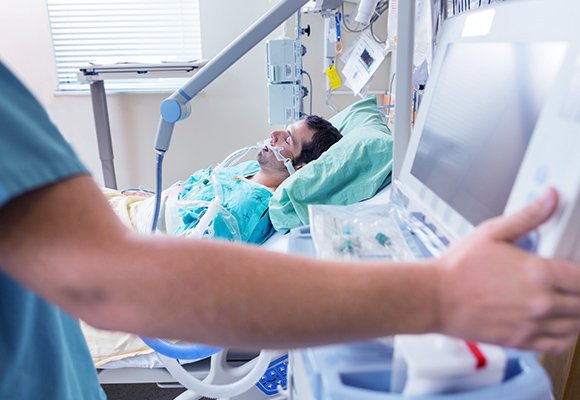
The unit provides high-intensity organ support for severe respiratory, cardiac, renal, autoimmune, septic, and poisoning-related emergencies.
- ECMO and CRRT for advanced cardiac, respiratory, and renal support
- Advanced invasive and non-invasive ventilatory support
- Plasmapheresis and extracorporeal cytokine removal
- Bedside dialysis for urgent renal support

The ICU manages a broad range of critical illness categories, from trauma and neuroemergencies to cancer-related critical care and donor maintenance.
- Polytrauma and neurological injury management
- Cardiac and post-operative critical care
- Advanced neurocritical care
- Brain-dead donor maintenance and perioperative management

Beyond bedside care, the ICU supports emergency transport, protocol-based sepsis response, and education for future critical care professionals.
- Safe transport of unstable patients in well-equipped ambulances
- Structured Sepsis Code or Code Brown activation
- Prompt antibiotics and resuscitation protocols for severe sepsis
- Critical care courses for aspiring intensivists
ICU FAQs
Which patients are admitted to the ICU?
The ICU prioritises patients who need immediate life-saving intervention, intensive monitoring after high-risk surgery, management of severe sepsis or organ failure, or specialised support that cannot be safely delivered in a regular ward.
What advanced equipment and support systems are available?
The source highlights ECMO, CRRT, advanced ventilators, bedside dialysis, plasmapheresis, extracorporeal cytokine removal, cardiac support systems, and central monitoring infrastructure.
How does the ICU respond to severe sepsis?
Ruby Hall Clinic describes a dedicated Sepsis Code or Code Brown protocol that accelerates identification, antibiotics, fluid resuscitation, and advanced extracorporeal support for eligible patients.
Need Immediate Advanced Critical Care?
For unstable or rapidly deteriorating patients, timely ICU admission can be decisive. Early escalation helps the critical care team start organ support and life-saving protocols without delay.
Book an Appointment